


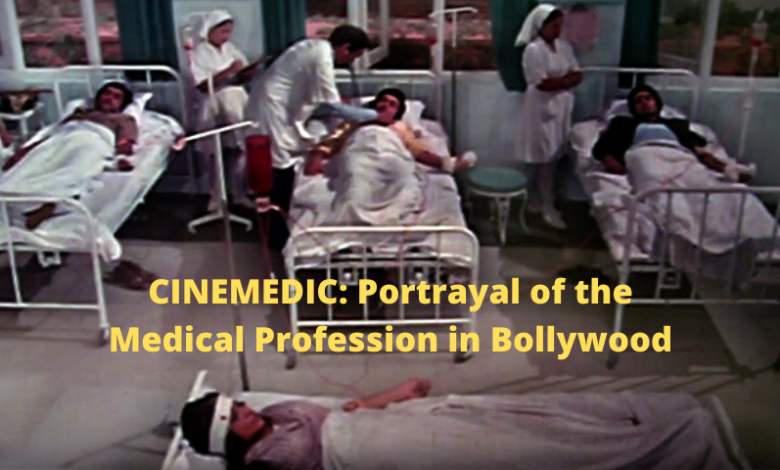
The incongruous portrayal of the medical profession in cinema and television serials has often been a topic of discussion in the medical community. Though the conversations are nearly always held in a lighter vein, the serious ramifications of these projections can never be over-emphasized. These depictions range from comic to ridiculous to, many a time, downright irresponsible.
It is not difficult to visualize what has now become the most commonplace of such scenes- A doctor palpates a young lady’s pulse and goes on to right away declare that she is pregnant. What should have been an informed opinion confirmed with medical tests is simply put out as a playful, unscientific method of declaring a pregnancy.

More of that. A C-grade film even goes to the extent of X-raying its leading lady to diagnose early pregnancy. Continuing in the same vein, every lady of reproductive age who vomits even once is instantly dubbed pregnant; and every one-night stand seems to culminate in the stork coming home with a bundle of joy!
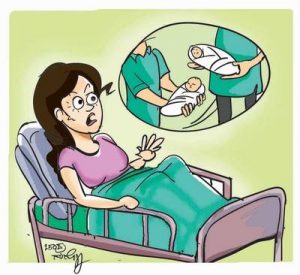
Hospitals are shown as places where babies are routinely swapped – whatever happened to the concept called security at the institution. Nurses in a K Jo film are expected to be glamorous – powder and lipstick always in place, dressed in tight outfits, speak in a seductive voice in a delightfully fake accent.
What is particularly sad about the portrayal of nursing staff as mere showpieces is that the dedication and hard work are shown by many of them in real life ends up being completely ignored.
The sheer ignorance of the functioning of the medical profession and a hospital’s best practices can be extended to Operation Theatre scenes. If the operating surgeon has a cap, mask and gown on, he does not wear gloves. If he puts on gloves and other paraphernalia, the mask goes missing. It becomes laughable when all major surgeries are shown being conducted without the help of an anaesthetist. And there is, of course, the regular scene of the mandatory Boyle’s trolley parked at the patient’s head end.
If there is one Bollywood movie which defies medical logic by many a billion-mile it ought to be Amar Akbar Anthony, the hugely popular blockbuster of the 1970s. There is a particular scene in the film in which three sons are shown donating blood to their mother, vein to vein, without any grouping, cross-matching or screening. While it is tempting to laugh away the scene, dismiss it as a director’s creative expression, the portrayal does precious little to inform viewers of the on-ground facts from the world of medicine. Imagine the consequences of such an action in a Coronavirus setting and the enormous problems it would pose for medical professionals.
Such is the impact of Bollywood movies on the national psyche that there are patients who expect doctors to recreate that ridiculous scene.
“Tu iss vansh ko beta nahi de saki, nikal ja mere ghar se”, is one refrain we have heard repeatedly in films. This is one dialogue that has caused maximum damage to gender equality. Obviously, writers of such dialogue have not heard that the male chromosome decides the sex of the child. Dialogues such as these are not only irresponsible but unpardonable too as this leads to wrong information shaping public perceptions around the country.
Recently, a ‘saas-bahu’ serial on television went on shamelessly to advocate the cause of prenatal sex determination. This, in spite of the PCPNDT Act currently in force in the country, which bans this despicable practice.
Miracles don’t seem to cease taking place in films. The hero generally survives the barrage of bullets fired at him. Every vehicular accident is associated with either loss of memory or its restoration. The sight of a blind person is generally restored after he sings a soul-stirring bhajan or bangs his head on the steps of a temple. In a Mithun starrer, Diya Aur Toofan, a dead person was revived and brought to life by a brilliant, groundbreaking ‘brain transplant’. Another film, this time from the Telugu industry, has the hero save a dying woman by tossing a donated heart straight into an operation theatre!
Then we have the classic case of the famous Jaadu ki Jhappi from Munnabhai MBBS projected as a panacea for every medical ailment, including for the wheelchair-bound Anandbhai’s serious-looking neurological disorder.
So far so good. The problem begins when patients start expecting these miracles from treating physicians. Cancer, unfortunately, is often projected as a terminal event. Death, of course, is more dramatic than mundane life and thus an essential ingredient of any cine-recipe. But instead of sending out negative signals, more encouraging values can be shown to give hope to the ones who are suffering. Moreover, it needs to be communicated that every malignancy is not lethal. In fact, many of them are now potentially controllable, if not curable.
To be fair to the Hindi film industry, there have been movies made on medical topics with positive messages too. Dr Kotnis still remains an Amar Kahani that portrayed the professional commitment of a young doctor. The 1971 produced Hindi flick, Anand, is yet another example of how a cancer patient was shown living his life to the fullest. Taare Zameen Par was a sensitive portrayal of a dyslexic child.
The anti-medico rhetoric slipped to a new low with Gabbar is Back that released in 2015. The movie had a sequence wherein doctors in a corporate hospital are shown indulging in fraudulent and unethical practices. More particularly, a dead patient is shown being put on a ventilator to inflate the hospital bill. Then there is Aamir Khan’s show Satyamev Jayate, which showed healthcare providers in an extremely poor light. Social scientists have opined that such negative portrayals contribute significantly to the assault on doctors.
Cinema is a powerful medium. Its reach, at least in India, spreads to every nook and cranny of the country. That it thrives on drama and exaggeration is also clearly understood and accepted. No one expects the film industry to make documentaries to spread health messages. Certainly, a filmmaker is not obliged to refer to medical books before writing a script. But, surely, they can act more responsibly and send out some ‘healthy’ signals.
Featured Image Source: Image Source: https://www.reckontalk.com/bollywood-doctors-dialogs-you-always-hear/





Well-written Dr. Arshad. You have succinctly described the tragicomic nature of this industry.
Tragic indeed that even in today’s era we are dished out such trash under the garb of entertainment.
Very well captured! 👍
Many thanks, Dr Prashanti Pandit, for your encouraging words.
I have never seen medical facts being mutilated and misrepresented in English movies as they often are in Indian language movies . Is it deliberate, I often wonder. To ridicule the medical profession is to highlight the few rotten apples ,so as to stigmatize all the other noble professionals ,who have struggled for decades to uphold the divinity of Medicine…
Thanks for your comment, Dr Ram Warrier.
A very nice article full of various examples misrepresenting the medical science. General public gets carried away by such scenes which spreads wrong information about medical practitioners.
Many thanks, Dr Pradhan.
Surely they can take inputs from medical professionals before incorporating medical scenes. I believe that in Omkara Saif Ali Khan took the advice of Orthopaedic surgeon Dr Dilip Nadkarni to mimic the walk of a person with a polio limp. He was also given credit for it.
Superbly penned Arshad . Hope this article instills some sense in Bollywood producers and directors .
Thanks for your suggestion, Dr Anil Tibrewala.
Thanks, Vikram.
Thanks, Anil.
Good medical practice describes what it means to be a good doctor.. Unfortunately in Bollywood they have their own take which Dr Arshad has so objectively put without mincing words. Very enlightening piece and very well written.. Kudos.
Thanks, Basheer. You’ve been a prominent part of the industry. So your opinion is that much more relevant.
Very well articulated. Barring very few films invariably all films have shown give out wrong message to public about our profesion.
Many t5hanks, Uday.
Very well articulated.Indeed before such portrayals a film maker should think about its impact on society and violence against doctors.
If such incidents of violence continue many students could be demotivated to join the medical profession.
Thanks, Bhavika.
Excellent one Doctor! Movies play a very big role in setting expectations, and creating perspectives. Nice humor stitched with a message, keep writing more please. Thanks
Many thanks, Amit.
Cinema has had a massive influence since time immemorial and unrealistic depiction of medical details causes more harm than good!
Completely agree that ‘a filmmaker is not obliged to refer to medical books before writing a script. But, surely, they can act more responsibly and send out some ‘healthy’ signals.’
Many thanks, Dr Rupawalla.
OMG! You write so well, doc!
Bollywood is plain stupid and insensitive to doctors. I don’t even see them doing basic research. Some doctors are shown as cartoon characters.
Will the work of doctors in CoVID- 19 battle change perception? I’m hoping against hope.
Thanks for the kind words, Smita.
Those showing doctors in a poor light are anyway hitting below the belt. People are shown with dramatic results following skin grafting etc, and patients come with this expectation of a miracle in Plastic Surgery.
What is especially hurtful is the attitude of the producer/director to a ridiculous piece of medical garbage being shown. I have seen an interview where a senior actor queried the producer about a particularly absurd medical scene, alluded to in this article…the producer had the gall to say…”by the time the public realise it is not possible, the film would have been a hit, and after that I don’t care”!!! This attitude shows the absolute callous approach, basically just worried about commercial returns, not caring about right or wrong.
So true.
Many thanks, Dr Jagannathan.
Very well written and thought provoking article.
Many thanks, Dr Bhave.
Brilliant analysis
Many thanks, Rekha.
I completely agree with Arshad. This definitely shows the medical and para medical personnel in bad light. It’s high time Bollywood grows up. Arshad is a very good writer, and has put forth unbiased views.
Thanks, Jyoti, for the kind words.
Dear Arshad.. a well written blog!
The best part about that scene in AAA was that the blood from the 3 brothers is going anti gravity into a single bottle and thereon to the mother!!
Thanks, Dr Mulchandani.
Brilliant article . I think there should be a technical director from the medical side to ensure accuracy of medical facts and a fair portrayal of the medical profession
Thanks, Dr Tirthani.
Very true and well captured. Let’s hope our more intelligent directors understand that cinema can be true to reality and be entertaining.
Many thanks, Lalita.
Arshad a very powerful article and realistic portrayal of our Bollywood. I really commend you on this article. I hope it is widely read mainly by the film fraternity. Every word you have said is unfortunately true. Thank you for speaking up for medical profession. I also hope that lay public read this article and realise that miracle such as shown in the movies do not really occu. And diagnosing pregnancy by pulse is a long standing going back decades.
So true, Dr Shrimankar.
Many thanks, really appreciate.
Very well written.
Best wishes
Nice write up and is very enlightening.
The best part of it was the three sons AAA donating blood to their Mom and the one about the instant diagnosis of pregnancy.
Blaming the BAHU FOR VANSH KA DIYAA has always touched to my heart. Without knowing the scientific reason the writers blindly writes the script . Bcoz of this it has created bad impact on society’s thinking. Society has always blamed a woman . Surprisingly this is still followed in city as well as in villages.
I like the write up. 👌👌
Thank you, Dr Kenjalkar.
Very well written!
Best wishes,
Thanks, Dr Sundar.
Excellent article. May I add, that calling a doctor for home visit whenever a person has fever.’Are tumhe to bihar hai. Ruko main doctor ko bulati hun’, has created an impact that a doctor must visit even for an insignificant fever
Thank you, Dr Bhondwe.
Dr Saheb
A well written piece which explains the so called medical scenes in our movies ,far removed from reality and through rose tinted glasses.
Many thanks, Adv Trivedi.
Many thanks, Brigadier, for your kind words.
Kind words, indeed. Many thanks, Bindu.
Sir
Well written article .
It is tragic and unfortunate that such depictions in name of commercialization at expense of medical professionals in cinema leads to the members of society behaving unruly in several situations.
regards
Thank you, Dr Vikram Pal.
Excellent article sir,But i believe we need to have a active PR team either at Association of medical consultants level or at IMA level which can effectively counter the negative publicity by journalists of any media platform to efffectively project doctors in a positive light
So well written.