

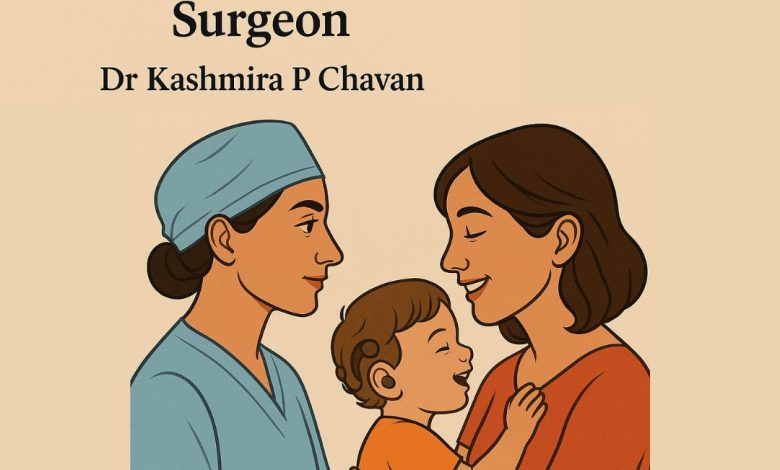
It was probably that one moment. Or maybe a cascade of moments. A baby’s sudden smile… the sparkle in a mother’s eyes… a mother trying to hold back tears as she heard her child say “Mama” for the first time. If you ask me why I became a cochlear implant surgeon, it wasn’t just one reason.
Let me take you back to the beginning.
I wanted to become a doctor. Not because it was expected of me, or because it seemed like the noble thing to do – though it is, unquestionably, noble. But because I found human biology fascinating. The idea that our voices, our ability to connect with one another are made possible by this intricately designed human body – that amazed me. And as I began my residency training in ENT– I was hooked.
Hearing… that was something else.
The first time I observed a cochlear implant surgery during my training, I wasn’t prepared for how much it would stir something inside me. My heart and brain lit up as the electrode array entered the cochlea – that tiny chamber of secrets. It housed not just sound, but stories. Music. Language. Laughter.
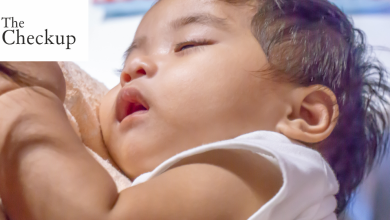
I still remember the first switch-on I attended. A toddler, barely two, born into a world of silence-which for him was normal. But as the audiologist ‘switched-on’ his implant and the first sound reached his brain, his eyes widened. Confusion gave way to surprise. Then a giggle. And then his mother’s tears. That moment didn’t just strike a chord – it transformed me.
But my journey toward cochlear implantation wasn’t shaped by standalone moments. It was also shaped profoundly by one person – Dr. Milind Kirtane. A pioneer of cochlear implant surgery in India, Dr. Kirtane is not just a name but a movement in himself. Watching him work is like witnessing an artist in motion – precise, thoughtful, deeply compassionate. His unwavering dedication to restoring hearing, his pioneering spirit, and his mentorship ignited a light in me that has never dimmed. I owe much of what I am today to his inspiration and generous teaching. His belief that every child deserves the gift of sound became a guiding path for me too.
Becoming a cochlear implant surgeon wasn’t a strategic career move. It was a calling. And once you hear it – pun unintended – you don’t ignore it.
Cochlear implantation though, is not like any other surgery – definitely not a plug-and-play solution. The surgeon’s role extends far beyond the operating room. Every single case is a process, a journey. It requires more than technical skill; it demands empathy and an unwavering commitment to each patient’s journey. Every surgery carries the weight of someone’s hopes for better communication, improved relationships, and enhanced quality of life. It requires teamwork – with audiologists, habilitationists, families – and an incredible amount of patience. You have to be not only a surgeon, but sometimes a quiet pillar of support. You have to explain to anxious parents that this is not a cure, but a tool – a powerful one, yes, but one that needs nurturing, stimulation, therapy, and above all, time and consistent efforts.
And yet, for all the hard work, it gives back tenfold.
One of my first patients was a two and a half year old girl from Ratnagiri. She had congenital bilateral severe-to-profound hearing loss. They family had found out the child couldn’t hear, and they wanted her to “be like other children”. Her mother – a single parent was being supported by her parents and a younger sister. They searched for solutions for a long time until they found out about cochlear implants. After loads of counseling, tests, fundraising, and tireless work from my team and an NGO partner, we managed to get her implanted.
Her giggling at her switch-on two weeks after surgery, and the joy on her mother’s face are unforgettable. This was followed by multiple sessions of MAPping (device programming) and auditory-verbal therapy over 4 years. And last year, the girl delivered a speech at her school’s Republic Day celebration.
This is why I do what I do.
It’s not just about giving sound. It’s about giving a connection. Possibility. Dignity. A shot at mainstream education. A chance for a child to sing, to shout, to whisper secrets. To belong.
Of course, the field has evolved rapidly. From single-channel implants to sophisticated multi-electrode arrays, from bulky speech processors to sleek ones, from adult post-lingual cases to early bilateral pediatric implants – we’ve come a long way. The science is thrilling. But the stories are what keep me going.
And every so often, I get a call or a WhatsApp message – sometimes from a grateful parent, sometimes a video of a child reciting a poem. That’s when I pause, smile, and remind myself – this is not just a profession. It’s a privilege.
We often speak about restoring hearing. But in truth, we restore something far greater – we restore lives. We restore futures. We give voice to a thought that may never have been heard. In choosing to become a cochlear implant surgeon, I did not just select a medical specialty – I became a part of one of medicine’s most remarkable success stories, where technology and human compassion converge to restore one of our most precious senses.
So, why did I become a cochlear implant surgeon?
Because I believe that every child deserves to hear their mother sing.
Because the joy of making the silent world speak again is unlike anything else.
Because even after all these years, a ‘switch-on’ still gives me goosebumps.
Because I had the privilege of being mentored by a visionary who has lit the path ahead for many of us.
And because in that brief moment – when sound meets soul – I witness a miracle.
Every single time.