


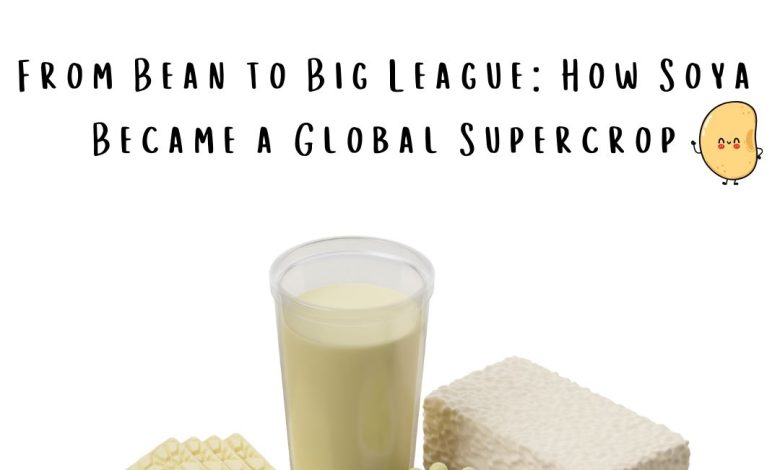
From Bean to Big League: How Soya Became a Global Supercrop
Not long ago, soya was seen as a quiet staple of vegetarian diets and Asian cuisine – humble tofu, miso soup, or soy milk in your morning latte. But today, soya is anything but modest. It has grown into one of the world’s most important crops, shaping what we eat, how we farm, and even how we think about health and sustainability.
So how did the humble soybean become a global agricultural superstar? The answer lies in a powerful mix of nutrition, science, economic demand, and an ever-changing global food system.
An Ancient Crop with Modern Appeal
Soya’s story begins in East Asia, where it has been cultivated for over 5,000 years. Revered in ancient China as one of the “Five Sacred Grains,” the soybean was a cornerstone of traditional diets, appearing in foods like tofu, soy sauce, and natto. Its appeal lay in its extraordinary versatility and high protein content—a plant-based food that could be fermented, processed, or eaten fresh.
But it wasn’t until the 20th century that soy truly began to spread its roots globally. The nutritional benefits that ancient cultures had long embraced caught the attention of scientists and policymakers in the West.
The Protein Powerhouse
What makes soy special? In a word: protein.
Soy contains all nine essential amino acids, making it one of the few complete plant-based proteins. For vegetarians, vegans, and health-conscious eaters, that makes soy a nutritional jackpot. It’s also rich in iron, calcium, fibre, and heart-healthy isoflavones – plant compounds linked to reduced cholesterol and potential protection against certain cancers.
As plant-based diets gained traction in the West, soya became a go-to option. Soy milk and tofu transitioned from niche health food stores to mainstream supermarket shelves. Beyond these basics, soy is now found in protein bars, meat alternatives, dairy substitutes, and even baby formula.
But the majority of soy grown worldwide isn’t going into veggie burgers – it’s feeding animals.
Feeding the World, One Soybean at a Time
About 70% of global soy production is turned into animal feed – mostly for poultry, pigs, and dairy cows. As global demand for meat has surged, particularly in fast-developing economies like China and Brazil, so has the need for efficient livestock feed. And soy fits the bill.
This rising demand for soymeal has transformed the crop into a linchpin of the global food supply. It’s now grown on a massive scale across the United States, Brazil, and Argentina, with millions of tons traded annually.
In short, if you eat meat, drink milk, or enjoy eggs, soy likely played a part in getting that food to your plate – even if you never touch tofu.
Soya and the Global Economy
In recent decades, soy has taken centre stage in the global economy. Countries like Brazil have rapidly expanded soy farming to meet growing demand, particularly from China – the world’s largest soy importer.
In fact, soybeans have become so strategically important that they’ve been used as bargaining chips in trade disputes. During the U.S.-China trade war in 2018, soybeans were one of the first targets of retaliatory tariffs, highlighting their geopolitical significance.
The Biotechnology Boost
Much of soy’s success also comes down to science. The development of genetically modified (GM) soy in the 1990s revolutionized production. These GM varieties are resistant to pests and herbicides, which allows farmers to grow more soy with fewer inputs.
While GM crops remain a point of debate – particularly in Europe – they’ve been widely adopted in countries like the U.S., Brazil, and Argentina. As a result, global soy yields have soared, keeping prices relatively low and supplies steady.
But there’s a catch.
A Dark Side: Deforestation and Environmental Impact
As soy production has scaled up, so have concerns about its environmental footprint. Vast swathes of the Amazon rainforest and the Brazilian Cerrado have been cleared for soybean farming, threatening biodiversity and contributing to climate change.
Much of this deforestation is driven by international demand. Consumers in Europe, North America, and Asia may unknowingly be fuelling it through the purchase of meat, dairy, and processed foods linked to soy-fed animals.
The good news? Awareness is growing. Sustainability certifications and “deforestation-free” pledges by major food companies are on the rise. But enforcement is still inconsistent, and environmental groups warn that much more needs to be done.
Health, Hormones, and Myths
No article on soy would be complete without addressing the health myths that have long surrounded it – especially the claim that soy disrupts hormones.
This concern stems from soy’s isoflavones, which are phytoestrogens – plant compounds with a structure somewhat similar to oestrogen. But research overwhelmingly shows that for most people, moderate soy consumption is safe and may even offer health benefits, such as reducing the risk of heart disease and easing menopausal symptoms.
Organizations like the American Heart Association and the World Health Organization support the inclusion of soy in a balanced diet. The key, as always, is moderation.
Soya’s Future: Green, Clean, and Protein-Packed
Looking ahead, soya’s future seems secure – but it’s evolving. As demand grows for plant-based alternatives and sustainable farming, soy will continue to be a central player.
There’s also rising interest in how soy can be grown more sustainably – through regenerative agriculture, reduced pesticide use, and better land management. Meanwhile, innovations like lab-grown meat and alternative proteins could one day reduce the pressure on soy as livestock feed.
Yet with its unmatched versatility, high yield, and robust nutritional profile, soy is likely to remain one of the world’s leading crops for decades to come.
Bottom Line: The Bean That Keeps on Giving
Whether you’re stirring soy milk into your coffee, grilling a veggie burger, or simply enjoying a bowl of edamame, you’re tapping into one of agriculture’s greatest success stories.
Soya is more than just a health food – it’s a global force. And like many powerful forces, it comes with both promise and responsibility. As consumers, the choices we make – from what we eat to what we support – will help shape how soy continues to grow and evolve on our plates, and on the planet.
Textbox one
Health Myths About Soya – Busted!
Despite its long-standing presence in traditional diets, soy has been the subject of several persistent myths. Here’s what the science really says:
🧬 MYTH #1: “Soy messes with your hormones.”
✅ FACT: Soy contains phytoestrogens (plant oestrogens), but they’re much weaker than human oestrogen. Studies show moderate soy consumption does not disrupt hormones in healthy individuals. In fact, soy may support hormonal balance, especially during menopause.
💪 MYTH #2: “Men shouldn’t eat soy – it lowers testosterone.”
✅ FACT: There is no reliable evidence that soy lowers testosterone or affects fertility in men. Clinical studies consistently show that soy protein has no effect on testosterone levels in men.
🎗️ MYTH #3: “Soy causes breast cancer.”
✅ FACT: On the contrary, populations that consume more soy (like in parts of Asia) tend to have lower breast cancer rates. Some studies suggest soy may even offer protective benefits when eaten regularly.
🧠 MYTH #4: “Soy is overly processed and unhealthy.”
✅ FACT: Whole soy foods like tofu, tempeh, edamame, and soy milk are minimally processed and nutrient-dense. Just like any food, it’s best to choose options with short ingredient lists and low added sugar or sodium.
Bottom Line: For most people, moderate soy intake is a safe, healthy, and sustainable protein choice.
Textbox two
How to Choose Sustainable Soya
Soy is a sustainability paradox: it’s a protein-rich, soil-enriching crop – but its industrial expansion has contributed to deforestation and biodiversity loss. Here’s how you can make planet-friendly soy choices:
🌿 1. Go for Whole Soy Foods
Tofu, tempeh, soy milk, and edamame are made from whole soybeans and have a lower environmental footprint than processed or hidden soy in animal feed and industrial food additives.
🐔 2. Eat Less Meat
Up to 75% of global soy goes to feed livestock. Reducing meat and dairy means indirectly reducing demand for soy-fed animals – one of the biggest drivers of soy-linked deforestation.
🛒 3. Look for Sustainability Certifications
Labels like the Round Table on Responsible Soy (RTRS) or ProTerra indicate the soy was grown without contributing to deforestation or environmental harm.
🌍 4. Support Brands with Responsible Sourcing
Some companies now trace their soy back to deforestation-free farms. Check company websites or sustainability reports. Consumer pressure is pushing the industry toward more ethical sourcing.
🥗 5. Choose Organic When Possible
Organic soy is grown without synthetic pesticides or GMOs. It’s often more environmentally friendly, though still important to verify sourcing if sustainability is your priority.
Every choice counts. Sustainable soy starts with informed shopping – and often, it tastes just as good.