



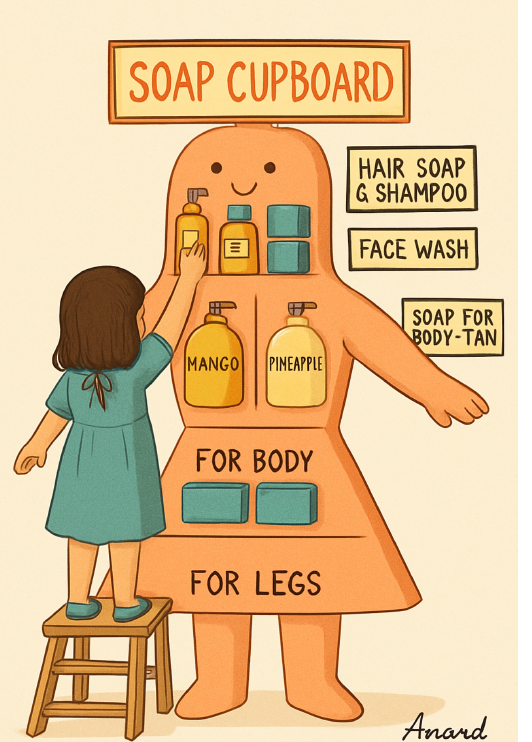
Fruits and flowers generally grow in gardens, fields, terraces, and balconies, but ask any parents who have survived a teenage girl, and they’ll say they’re mostly found in the bathroom. Thus, we had soaps containing strawberries, bananas, lemons, mangoes, peaches, oranges, apples, grapes, apricots, roses, tulips, lilies, and sunflowers, to name a few. However, soaps cannot be consumed to address nutritional needs. My daughter used to explain, with all seriousness, that these soaps are intended for different parts of the body at various times of the day.
Thus, one was for hair in the morning, one was for skin over the hands, one was for fingers, and another one was exclusively for feet and toes in the evening. There was a deep science and art involved in the right use of the various fruits and flowers contained in the soaps. This is a major problem. Right from my high school chemistry days, my very ordinary impression of soap was that of a reaction between an alkali (sodium hydroxide) and an acid (fatty acids) that generated a salt (soap), glycerol, and water. My grave chemistry teacher taught this as a saponification process.
My generally ordinary view of soap was exacerbated by a whiz-kid cousin, an IIM-A product working in a company producing soaps (among other things), who further demystified the soap process. He asked me to imagine the same chemistry experiment in an industrial setting with enormous containers containing the same acid and alkali and a receiver getting all the soap. Another container adds various perfumes and essences to this soap, and voila, one has the branded soap for sale. I asked him an innocent question, “Why does one soap cost more than the other?”
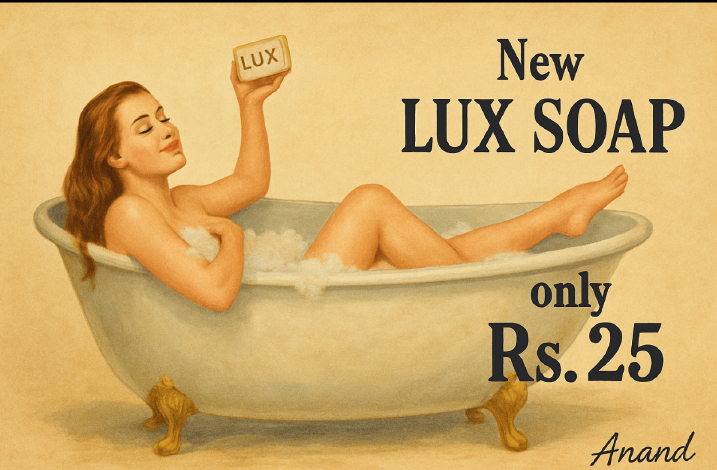
He replied that if you see a highly celebrated model in a bathtub, coming out from the sea, or in a waterfall with a soap bar in one hand and a song in the background, the price goes up. If you have an ugly mug singing under the shower severely scrubbing his body, the soap will not cost much. The consumer is essentially footing the bill for the soap models. He helpfully added that I should not get fooled by words like “new” and “upgraded” because all upgrades mean that the celebrity status of the model has gone up. The soap, its perfumes, and its essences stay the same.
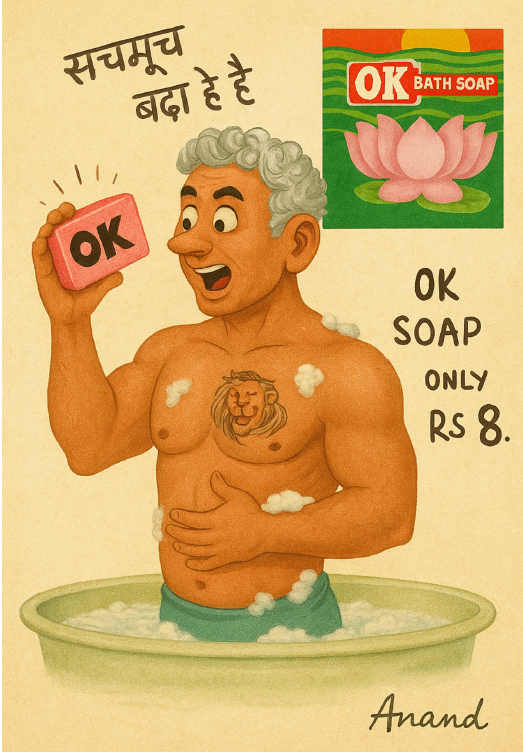
Anyway, for a hosteller perennially struggling with the budget going off in buying textbooks, movies, and eating out, my favourite and only brand of soap for everything related to the skin from head to toe (hair, skin, and nails included) was Lifebuoy. The all-in-one soap was a workhorse for many tasks, including washing clothes, cleaning teacups and utensils, and removing stains from the floor caused by pigeon droppings. It was a favourite of all the boys forever tottering on the edge of poverty. How proud we would feel when we saw a hulk crooning the Lifebuoy jingle on the big screen before a movie. That is our soap, we would proudly say.
However, the rich were far away from the world of Lifebuoy. I mention this because there was an experiment in our biochemistry lab where the demonstrator informed us that the final product would smell like Lifebuoy soap. Most of us performed the experiment successfully because we knew what the end result should look or rather smell like. The students spoke in hushed whispers about a rich girl in the class who was completely lost, and the story has it that she urgently sent her driver to fetch a bar of Lifebuoy soap to smell it. Ah! It is so difficult to be rich.
For shaving, we encountered another remarkable innovation: Godrej shaving soap, which was available at a shockingly low price, even for us. Anyway, it was also prudent not to use anything more expensive that would inevitably get stolen in the dark of the night. The Godrej shave soap was truly the creation of a genius. I strongly suspect this item was made by a member of the Godrej clan who was forced to stay in a hostel. Godrej shaving soap is not coming up on my Amazon, and I hope we did use a genuine brand. If the Godrej people have discontinued it, then they are surely doing a tremendous disservice to the nation.
It was a never-ending shaving soap, and one could use a single bar for the entire four and a half years of medical school. The absolute inability of that soap to dissolve itself and vanish made many of us throw it away in disgust after a few years and buy a new one. The soap, probably made of some rare stone, hardly produced any foam, but it provided a passable shave as long as one did not aim to impress girls with a clean-shaven appearance. In that situation, we had to steal the branded creams from our more fashionable or wealthier hostel mates. Generally, such branded items would be hidden in the deepest and the remotest corners of the room. But the ingenuity of the boys could more than match such cheap tricks. But on the whole, as a socialistic enterprise, the unity of the hostel lay in the uniformity of the soap.
The present-day hotels have lost my trust and respect, much like the cheap trickster hostellers who hide their bathroom products. There was a time when soaps from various hotels across the country and around the world adorned the bathrooms of many, including my own. However, in recent years, most hotels have switched to providing liquid soaps and shampoos in fixed containers that cannot be removed and placed in our bathrooms. What a disgusting change!
Anyway, such is the saga of soaps in our life. Now, we are inundated with hundreds of brands of soaps promising to do many things possible with our skin, hair, and nails—the deadest of the deadest parts of the body. The soap companies make hay while the sun shines on our bodies. There are a few rebels, of course, like a famous film star who does not bathe for six months in a row. He believes in a natural regeneration of the skin cells. Eeks, this person would never become a soap model, I can assure you.
The saga of the soap continues to play havoc with our purses and our bathroom storage units, while at the heart of it is a salt as an end product of an alkali and acid in the right proportions, to which are added anything one wants from the plant, animal, or mineral kingdom. Slick advertisements and attractive models do the rest. Anyway, I am exhausted now and will have a bath with a transparent glycerine soap, which apparently is a byproduct of the same reaction. Marketed for winter and embodying the purest love of a mother, this expensive scam—sorry, soap—which vanishes in no time, has been a source of my beauty (and, according to my detractors, my ugliness) for quite some time. You have a wash too.
CARTOONS BY DR. ANAND NAREGAL