

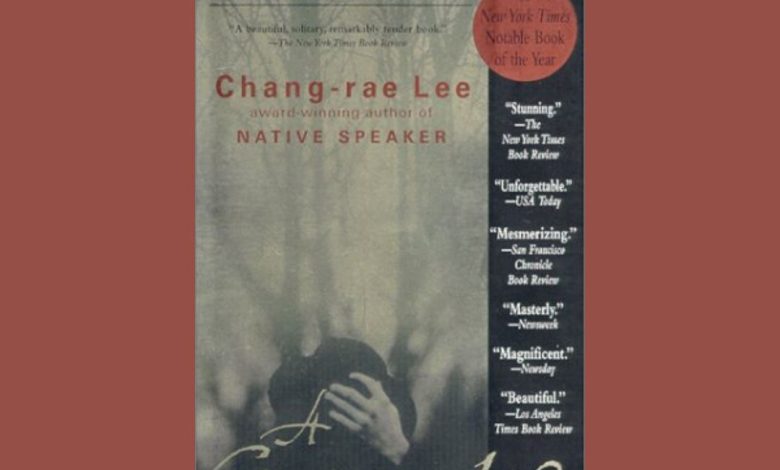
For the bibliophile in every busy medical professional, searching for a story that digs deeper than the surface, Chang-rae Lee’s A Gesture Life offers a compelling diagnosis of the human condition. At its core, the novel is about a man who has mastered the art of appearances, only to find himself estranged from his own history and the people he longs to connect with. This isn’t your typical page-turner—it’s an experience, a slow immersion into the consciousness of Franklin “Doc” Hata, a man defined by courtesy and haunted by history. The narrative meanders quietly, tracing the surface calm of Hata’s life in the affluent suburb of Bedley Run, where he is the exemplar of decorum, the medical supply shop owner everyone greets with a smile. Still, from the very first pages, there’s a sense that something trembles beneath his practiced tranquillity, a persistent echo of isolation and regret that readers will sense even before words reveal their source.
If you’re looking for the kind of novel that spells everything out, A Gesture Life will frustrate. Lee’s prose is elegant and subdued, woven with flashbacks that gradually uncover Hata’s past. These include his service as a medic for the Japanese Army during World War II, where he attended to Korean “comfort women”—young women forced into sexual slavery by the Japanese military. Hata navigates a moral landscape riddled with profound suffering and ethical compromise. The explicit descriptions of the women’s condition, alongside the brutal realities of wartime medical duty, force the reader to confront the gap between medical ideals and the dehumanizing necessities of conflict. Characters such as Captain Ono, a brilliant surgeon who exhibits a chilling disregard for human dignity, make this tension sharper. His clinical efficiency demonstrates how professionalism can harden into detachment. The effect is disturbing, and it compels us to ask where the limits of compassion lie when duty demands the unimaginable.
Yet Hata’s story is not only about war or medicine. At its heart, it is about belonging. He’s a reminder of how complicated the idea of “belonging” can really be. Born in Korea, adopted by a Japanese family, and later reinvented as an American shopkeeper, Hata is constantly reshaping himself in search of acceptance. His tireless performances of respectability win admiration but leave him emotionally distant, most painfully from his adopted daughter, Sunny. Lee shows us that assimilation can be its own form of exile, where performance replaces intimacy.
Part of the novel’s brilliance is the writing style. Lee resists ornamentation, favouring clarity and restraint. On the page, the language is straightforward, but the situations it describes carry immense complexity. Through everyday encounters—a strained conversation, a polite gesture, a fragment of memory—we glimpse the deeper themes at work. This is not a book obsessed with plot mechanics but it’s fascinated by the invisible machinery of memories, by the small gestures that accumulate into an entire life.
What truly makes the book resonate with anyone in medicine is the way Lee explores the “gesture” itself. For Hata, gestures of care are both lifeline and prison: acts of politeness, proficiency, rituals of bedside manner. It is easy for professionals to recognize this paradox: the reliance on gestures that provide safety and recognition, yet can become substitutes for genuine connection. But the novel gently asks: aren’t we wounded when we let gestures substitute for genuine intimacy? If you’re a doctor or a medical student, Lee’s book is an invitation to reflect. Gestures bring safety; they grant recognition. But they cannot, by themselves, heal the deep wounds carried in silence. At times, reading the book feels like placing a stethoscope on your own chest, listening for what lies between the rhythms of routine and silence.
A Gesture Life might not be an easy book. Sometimes it’s painfully slow, mirroring the work of genuine introspection. But for those willing to sit with its quiet unfolding, it offers rare rewards: the realization that redemption and belonging are only possible when the gestures come to mean something deeper.
Lee’s accomplishment is subtle but significant. He crafts a story where the past is always present, where small acts are laden with unspoken emotion, and where the challenge is to shed just enough armour to risk a fuller connection. The moments of greatest impact aren’t thunderous but quietly aching, unfolding in silence. The story does not resolve neatly, nor does it seek to. Its power lies in nuance, in asking us to pay attention to the quiet and the unsaid. And in doing so, it reminds us that the deepest truths often emerge not in what people declare, but in what they withhold. For anyone in medicine, accustomed to piecing together stories from fragments, A Gesture Life feels both resonant and profoundly humane.