


Tata Mumbai Marathon 2026: Orthopaedic Surgeon Dr Kartik Karkera Tops Indian Field

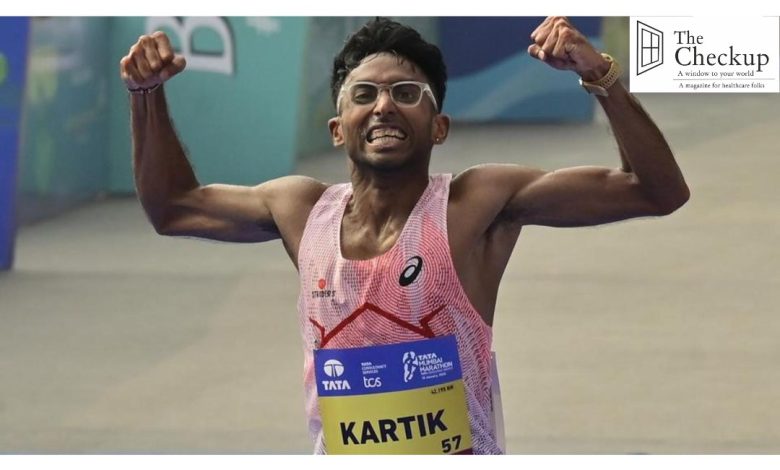
The Tata Mumbai Marathon 2026 was not just a celebration of athletic excellence, it was a moment of quiet pride for the medical fraternity.
Amid elite international competition and one of Asia’s most demanding marathon courses, Orthopaedic surgeon Dr Kartik Karkera emerged as the top Indian finisher, delivering a performance that deserves recognition well beyond the running community.
A Surgeon Who Practices What He Teaches
For doctors, especially orthopaedic surgeons, movement is not an abstract concept—it is daily clinical currency. What made Dr Karkera’s achievement remarkable was not merely his finishing position, but the way it reflected deep respect for human physiology and musculoskeletal science.
Running a marathon at this level demands far more than fitness. It requires:
- Precise understanding of biomechanics and load distribution
- Meticulous training periodisation to balance performance with tissue recovery
- Acute awareness of injury thresholds, fatigue markers, and early warning signs
Dr Karkera’s run stood as a living demonstration of the principles he and many in the profession advocate every day to patients: consistency over intensity, discipline over impulse, and recovery as an active process.
Leading the Indian Field with Method, Not Excess
In a race environment that often rewards aggression, Dr Karkera’s performance was defined by control.
Mumbai’s course is notoriously unforgiving—humidity, temperature shifts, and repetitive turns place sustained stress on joints, tendons, and neuromuscular coordination. To finish as the leading Indian runner under these conditions reflects not only physical conditioning, but exceptional pacing intelligence and biomechanical efficiency.
This was not an athlete outrunning pain.
This was a clinician managing load, kilometre after kilometre.
Standing Tall Against Global Excellence
At the international level, East African runners once again dominated the podium, a testament to decades of excellence driven by altitude adaptation, running economy, and deeply competitive training cultures.
That context makes Dr Karkera’s achievement even more significant. Competing on the same course, under the same physiological stressors, his performance underscored that Indian athletes and Indian doctors can deliver world-class endurance when preparation is intelligent and evidence-led.
A Role Model for the Medical Community
The Mumbai Marathon increasingly sees participation from doctors across specialties. Yet few performances resonate as strongly as Dr Karkera’s, because they address a quiet contradiction many clinicians live with: advising patients on movement while struggling to prioritise their own.
In an era marked by burnout, long hours, and emotional fatigue, his achievement sends a powerful message:
- High-demand medical careers need not exclude high-level physical performance
- Physician health is not indulgence—it is professional responsibility
- Leading by example remains one of medicine’s strongest tools
Beyond the Finish Line
From a musculoskeletal standpoint, completing a marathon involves tens of thousands of loading cycles across the knees, hips, spine, and feet. To do so competitively, without breakdown, reflects months if not years of structured training and respect for recovery.
Dr Karkera’s finish was not a single morning’s success. It was the visible outcome of long-term discipline, clinical insight, and quiet commitment.
When Medicine Runs Its Own Race
As Mumbai returned to its familiar pace after race day, the significance of this performance lingered—particularly for the medical community.
Dr Kartik Karkera did more than lead the Indian field.
He demonstrated what happens when medical knowledge is not confined to clinics and operating theatres, but applied rigorously to life itself.
At the Mumbai Marathon 2026, East Africa showed the world its dominance.
An Indian orthopaedic surgeon showed us what leadership, preparation, and evidence-based endurance truly look like.