

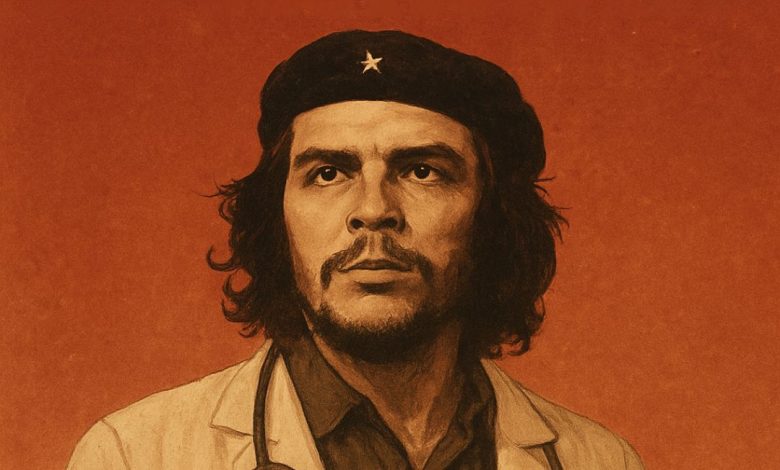
On a sweltering afternoon in 1952, a 24-year-old Argentine medical student arrived at a leper colony on the banks of the Amazon River. Ernesto Guevara had traveled there by motorcycle, crossing thousands of miles through some of South America’s most challenging terrain. What he witnessed during that journey—and in the months that followed—would transform not just his own life, but the course of modern history.
The patients at San Pablo leper colony lived in isolation, feared and forgotten by society. Yet Guevara refused to wear the customary gloves when examining them, insisting on physical contact and human dignity. When the staff threw him a farewell party before his departure, he swam across the piranha-infested river to reach the patients’ side of the facility, unwilling to celebrate without those he had come to serve. Years later, one of his companions recalled that Guevara saw these marginalized patients as “the shivering flesh-and-blood victims” of a system that had abandoned them.
This was the beginning of a radical vision that would lead Ernesto “Che” Guevara to abandon conventional medical practice and take up arms in pursuit of what he considered a higher form of healing: revolutionary social change. His journey from physician to guerrilla commander remains one of the most controversial transformations in modern history — and one that continues to provoke urgent questions about the role of medicine in addressing societal injustice.
Born in Rosario, Argentina, on June 14, 1928, Ernesto Guevara grew up in a middle-class family with leftist sympathies. His childhood battle with severe asthma may have sparked his early empathy for physical suffering. In 1947, he enrolled at the University of Buenos Aires to study medicine, completing his degree in 1953.
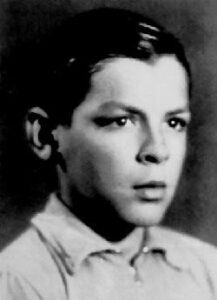
(Young Ernesto Guevara)
But Guevara’s real education came outside the classroom. During his medical training, he embarked on two extensive journeys across South America—first a 4,500-kilometer bicycle trip through rural Argentina in 1950, then the famous nine-month motorcycle expedition through Argentina, Chile, Peru, Ecuador, Colombia, and Venezuela in 1951-52. These travels exposed him to a continent ravaged by poverty, disease, and inequality on a scale that shocked his conscience.
In the remote communities he visited, Guevara documented rates of malnutrition, parasitic infections, and tuberculosis that basic medical resources could have prevented. He observed peasants working land they did not own, miners laboring in conditions that destroyed their health, and indigenous communities living without schools, electricity, or access to healthcare. In Chile, he encountered a persecuted communist couple in the Atacama Desert who “did not even own a blanket”—a moment he described as meeting victims of “capitalist exploitation” in the flesh.
What distinguished Guevara’s response was his insistence on understanding these conditions not as isolated misfortunes but as symptoms of systemic failure. In The Motorcycle Diaries, written during these journeys, he recorded his observations with clinical precision—but also with growing moral outrage. He was witnessing what modern public health now recognizes as the social determinants of health: the economic, political, and social conditions that shape health outcomes more powerfully than any individual medical intervention.
By the time he received his medical degree, Guevara had reached a radical conclusion: “To help these people,” he later wrote, he needed to “leave the realm of medicine and consider the political arena of armed struggle.”
From Clinic to Revolution
Guevara’s transformation accelerated in Guatemala in 1954. While working briefly as a physician, he observed President Jacobo Árbenz’s attempts at land reform and social programs designed to address poverty and health disparities. When the CIA orchestrated a coup against Árbenz—at the behest of the United Fruit Company, whose unused lands were being redistributed to peasants—Guevara witnessed the violent destruction of a democratically elected government attempting to improve public health and social welfare.
(President Jacobo Árbenz)
The lesson was clear: meaningful improvements in population health would face opposition from powerful interests. This conviction was reinforced everywhere he looked. The largest causes of preventable death and disability in Latin America were diseases of poverty that modern medicine already knew how to prevent and cure. The problem was not knowledge but access, not science but politics.
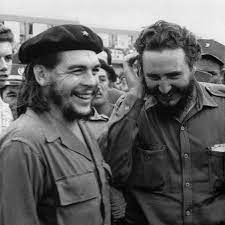
In Mexico in 1955, Guevara met Fidel Castro and joined the 26th of July Movement’s planned invasion of Cuba. Though trained as a physician and designated as the group’s combat medic, Guevara’s role quickly evolved. During the initial landing in Cuba in November 1956, when Batista’s forces ambushed the rebels and most were killed or captured, Guevara faced a symbolic choice: a box of ammunition or his medical supplies. He chose the ammunition—a decision he later described as a pivotal moment in his life.
Yet Guevara never entirely abandoned his medical identity. Throughout the guerrilla campaign in Cuba’s Sierra Maestra mountains, he established health clinics alongside military operations. He set up schools to teach illiterate peasants to read and write—combating what he called “the battle against ignorance.” He organized workshops to train medical personnel and built facilities to make essential medicines and supplies. His approach reflected an understanding that revolutionary change required addressing multiple dimensions of human wellbeing simultaneously.
After the revolution’s success in 1959, this holistic vision shaped Cuba’s early policies. The new government rapidly expanded access to healthcare and education, launched nationwide literacy campaigns, and implemented land reforms designed to address the economic roots of poor health. Guevara personally oversaw programs to eradicate infectious diseases and improve nutrition. Within three years, Cuba’s literacy rate rose from 60% to 96%—one of the most successful public health interventions in modern history.
The Philosophy of Structural Healing
Guevara’s political philosophy was grounded in ideas that resonate deeply with contemporary public health. He understood that individual clinical encounters, however compassionate, could not overcome systemic barriers to health. As he wrote in 1960, “The laws of Marxism are present in the events of the Cuban Revolution”—by which he meant that material conditions, not individual choices or character, were the primary determinants of human welfare.
This perspective led Guevara to emphasize what modern medicine calls upstream interventions—addressing root causes rather than symptoms. He advocated universal access to healthcare as a fundamental right, not a commodity. He stressed prevention over treatment. He recognized that education, housing, nutrition, and economic security were as essential to health as medical care. And he insisted that physicians bore responsibility not just to their individual patients but to society as a whole.
Central to Guevara’s vision was his concept of the “new man”—a citizen motivated by moral commitment and social solidarity rather than material self-interest. He believed that creating a just society required not only structural changes but a transformation in consciousness and values. For Guevara, this meant that physicians and other professionals should engage in volunteer work, embrace material sacrifice, and orient their expertise toward collective benefit rather than personal gain.
His own example was uncompromising. As Minister of Industries and President of the National Bank, positions of considerable power, Guevara worked 36-hour shifts, participated in voluntary agricultural labor on his days off, and famously signed Cuba’s currency with only “Che”—a gesture of contempt for the monetary system he saw as perpetuating inequality. He declined material privileges and lived spartanly, embodying his conviction that revolutionary change required personal as well as political transformation.
Lessons for Medicine Today
What can contemporary physicians learn from Che Guevara’s life—particularly from a figure whose methods and legacy remain controversial?
First, Guevara’s experiences underscore the fundamental importance of social determinants of health. His motorcycle journeys revealed a truth that modern epidemiology has confirmed: poverty, inequality, inadequate housing, poor nutrition, lack of education, and limited access to resources are more powerful determinants of health outcomes than most clinical interventions. Today’s physicians increasingly recognize that addressing these factors requires engagement beyond the exam room—through advocacy, policy work, and community partnerships.
Second, Guevara exemplifies the value of direct experience with underserved communities. His understanding of health inequities deepened through sustained engagement with marginalized populations. For contemporary physicians, similar experiences—whether through rural practice, work in underserved urban communities, international health initiatives, or public health programs—can foster the empathy and systemic understanding necessary for meaningful advocacy.
Third, Guevara challenges physicians to consider their broader social responsibilities. The ethical principles that guide clinical practice—respect for human dignity, commitment to reducing suffering, protection of the vulnerable—extend beyond individual patient encounters. Physicians possess knowledge, credibility, and social standing that create opportunities and obligations to engage with the structural conditions that shape health. Whether through participation in professional organizations, engagement in health policy development, community organizing, or public education, physicians can leverage their expertise to address health inequities.
Fourth, Guevara’s emphasis on prevention and education over treatment alone anticipates contemporary public health priorities. His literacy campaigns in Cuba recognized that education improves health outcomes across multiple dimensions. His focus on eradicating infectious diseases through systematic public health measures rather than solely treating individual cases reflects an understanding of population-level intervention. Modern physicians can similarly prioritize preventive medicine and patient education while advocating for public health investments.
Finally, Guevara’s life illustrates the power of moral conviction and personal commitment. While his political conclusions and methods remain controversial, his willingness to sacrifice personal comfort and security for his principles offers a challenging example. In an era when physician burnout rates exceed 50% and many doctors feel trapped by bureaucratic demands and financial pressures, Guevara’s single-minded dedication to a vision of healing that transcended individual transactions poses uncomfortable questions about purpose and priorities.
A Complex Inheritance
On October 9, 1967, in a mud schoolhouse in the Bolivian village of La Higuera, the wounded Guevara faced his executioner. According to witnesses, his final words were: “Shoot, coward! You are only going to kill a man!” The 39-year-old physician-turned-revolutionary died trying to spark an uprising that would address the poverty and injustice he had first witnessed as a young medical student.
In the decades since, Guevara’s image has been commodified into perhaps the most recognizable icon in the world—an ironic fate for someone who despised consumer capitalism. Yet beneath the commercialized symbolism, his life poses enduring questions about the responsibilities of those with knowledge and skills to heal.
Today’s physicians face challenges Guevara could not have imagined: climate change’s health impacts, pandemic threats, healthcare costs that create barriers to access, persistent racial and economic health disparities, and public health systems chronically starved of resources. Addressing these challenges requires clinical excellence—but also the systemic perspective, moral commitment, and willingness to engage with political and social structures that Guevara exemplified.
The physician and writer Paul Farmer, whose work brought healthcare to impoverished communities in Haiti and whose organization Partners In Health has treated millions globally, once observed that “the idea that some lives matter less is the root of all that’s wrong with the world.” This was Guevara’s core conviction, expressed through a life that, for all its contradictions, never wavered from the belief that addressing human suffering required confronting the conditions that produce it.
Contemporary physicians may not agree with Guevara’s political ideology or methods to learn from his fundamental insight: that healing, at its deepest level, is inseparable from justice. The challenge for medicine today is to pursue that vision through means that honor both the profession’s commitment to reducing suffering and its foundational respect for human dignity and rights—to be revolutionaries in the truest sense, transforming the conditions that create illness through service, advocacy, and solidarity.
In the end, perhaps Guevara’s most lasting contribution to medicine is not any particular achievement but a question that continues to resonate: If physicians understand the social determinants of disease, if we recognize that poverty, inequality, and injustice kill as surely as any pathogen, what are our moral obligations to address them? It’s a question each generation of physicians must answer for themselves—but one that Che Guevara’s life ensures we cannot ignore.