
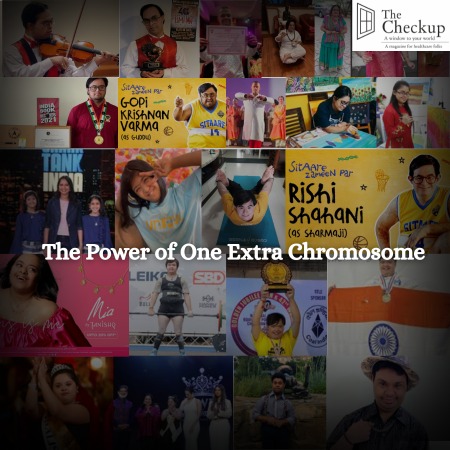
A journey from ancient mystery to modern understanding
1. Existence in Ancient Times
Evidence:
- Down syndrome has existed for thousands of years, long before it was recognized medically.
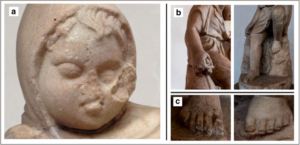
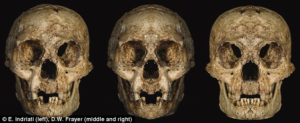
- Archaeologists discovered a 9th-century French skeleton of a child showing distinct Down syndrome features — the oldest confirmed case in history.
Pre-Columbian pottery and art from the Americas depict individuals with round faces, upward-slanting eyes, and short limbs — likely inspired by real people with Down syndrome.
Interesting facts:
- Ancient societies interpreted congenital differences as spiritual signs — divine blessings, omens, or karmic consequences.
- Some cultures saw children with unusual features as “touched by the gods” rather than disabled.
- Despite limited understanding, families sometimes cared for them at home, as seen in burial findings where such children were buried respectfully with others.
2. Discovery by Dr. John Langdon Down (1866)
The breakthrough:
- In 1866, Dr. John Langdon Down, a British physician, described a consistent pattern of physical and cognitive traits in certain patients.
- He published a paper titled “Observations on an Ethnic Classification of Idiots.”
- This was the first clinical identification of what is now known as Down syndrome.
Interesting facts:
- Down’s classification was based on facial similarities — not behavior or intelligence.
- He coined the (now offensive) term “Mongolian idiocy”, thinking the facial features resembled those of people from Mongolia — a product of 19th-century racial science.
- Despite this misstep, Dr. Down’s humane approach stood out: he believed in educating and caring for his patients, not isolating them.
- His home in Earlswood Asylum was one of the first to teach self-care and vocational skills to individuals with intellectual disabilities.
3. The Genetic Revolution – Jérôme Lejeune (1959)
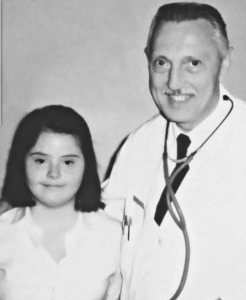
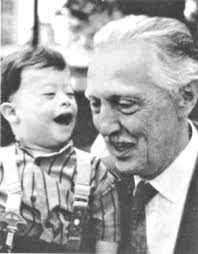
French geneticist Dr. Jérôme Lejeune discovered that individuals with Down syndrome have an extra copy of chromosome 21, making it the first chromosomal disorder ever identified.
Interesting facts:
- The finding was a turning point in genetics — it proved that intellectual disabilities could have biological causes, not just social or moral ones.
- Lejeune made the discovery using a simple microscope and early karyotyping, at a time when genetic tools were in their infancy.
- There are three types of Down syndrome:
- Trisomy 21 (95%) – every cell has an extra chromosome.
- Translocation (3–4%) – extra chromosome attached to another.
- Mosaicism (1–2%) – only some cells have the extra copy.
The discovery sparked the rise of medical genetics as a global discipline.
4. Early Diagnosis and Medical Advancements
Timeline:
- Before the 1950s: diagnosis was purely based on appearance and behavior.
- After 1959: karyotyping confirmed chromosomal differences.
- 1970s–80s: amniocentesis and chorionic villus sampling (CVS) enabled prenatal diagnosis.
- 2000s: Non-Invasive Prenatal Testing (NIPT) arrived — detecting trisomy 21 through a simple maternal blood sample.
Interesting facts:
- People with Down syndrome often share common physical traits but vary widely in abilities and personality.
- Many have remarkable visual memory, empathy, and musical talent.
- Advances in cardiac surgery drastically improved life expectancy, since about 50% of infants are born with congenital heart defects.
5. Changing Social Perceptions Through Time
| Era | Society’s View | Common Treatment | Interesting Facts |
| Ancient times | Seen as divine or cursed | Spiritual rituals | Burial evidence shows they were valued members of society |
| 1800s | Classified as “idiots” or “Mongoloids” | Institutionalization | Some asylums like Earlswood encouraged education |
| Early 1900s | Pity and segregation | Institutional care | Terms like “mental retardation” became common medical labels |
| Mid-1900s | Shift to compassion | Special education | Parents’ advocacy groups began forming worldwide |
| Late 1900s | Inclusion and rights | Therapy and schooling | TV shows and art began showing real individuals with Down syndrome |
| 2000s–Today | Acceptance, neurodiversity | Equal rights and inclusion | People with Down syndrome work, model, act, and live independently |
Interesting facts:
- The first person with Down syndrome to graduate from college was Karen Gaffney (USA), who is also a swimmer who crossed the English Channel as part of a relay team.
- Madeline Stuart (Australia) became one of the world’s first professional models with Down syndrome.
- Pablo Pineda (Spain) became the first European university graduate with Down syndrome and an actor, starring in Yo También (Me Too).
6. Global Recognition and Advocacy
Key Milestones:
- 1970s: The first Down syndrome organizations were formed, led by parents.
- 1980s–1990s: Global disability rights movements gained momentum.
- 2006: The UN Convention on the Rights of Persons with Disabilities affirmed equality and inclusion.
- 2012: The UN officially recognized March 21 (3/21) as World Down Syndrome Day — symbolizing three copies of chromosome 21.
Interesting facts:
- Each year on March 21, people wear mismatched socks to celebrate diversity and raise awareness.
- The theme often focuses on inclusion, education, and employment.
- Modern media, such as Netflix’s Born Different and Disney’s Firefly Lane, include characters with Down syndrome to normalize representation.
7. Modern Understanding and Life Today
Today’s reality:
- Individuals with Down syndrome lead fulfilling lives, attend mainstream schools, hold jobs, and build families.
- Average life expectancy has risen from 10 years in 1929 to over 60 years today.
- Early speech therapy, physiotherapy, and educational support have transformed development outcomes.
Interesting facts:
- Children with Down syndrome are often described as emotionally intelligent and affectionate — with strong social understanding.
- Studies show they have lower rates of certain cancers and higher pain tolerance than average.
- However, they have a higher risk of Alzheimer’s disease later in life — possibly linked to the extra copy of chromosome 21, which carries the APP gene associated with Alzheimer’s.
8. Symbolism and Awareness
Interesting facts:
- The Down Syndrome Awareness Ribbon is blue and yellow, representing hope and optimism.
- The extra chromosome 21 makes them “trisomic,” hence the date 3/21 for awareness day.
- Global awareness campaigns now focus on the theme “Leave no one behind.”
Indian Statistics on Down Syndrome
Down syndrome is one of the most common chromosomal conditions in India, with an estimated 1 in every 800–1,000 live births affected. According to the Indian Council of Medical Research (ICMR), approximately 30,000 children are born with Down syndrome each year in the country.
Studies show that the prevalence is higher in urban areas due to improved diagnosis and reporting, though underdiagnosis in rural regions remains a concern. Maternal age is a significant risk factor — mothers above 35 years have up to a fivefold increased risk of having a child with Down syndrome.
Early screening and diagnostic tests such as NIPT (Non-Invasive Prenatal Testing) and amniocentesis are increasingly available in India, but awareness and accessibility remain limited, especially in tier-2 and rural hospitals.
Despite this, advocacy and inclusion efforts have grown, with organizations like the Down Syndrome Federation of India (DSFI) and Amrit Foundation promoting education, early intervention, and social acceptance for individuals with Down syndrome.
| Region / Study | Year(s) | Key Findings / Prevalence |
| India overall (older estimate) | ~2000s | ~21,400 infants with Down syndrome born annually in India. (PubMed) |
| “Birth defects in India: Hidden truth…” | ~2012-2013 | Using incidence ~1.4 per 1,000 live births, estimates ~37,000 babies born per year with Down syndrome. (PMC) |
| Baroda (SOMDI Project) | ~1993-1997 | In ~31,775 births, there were 33 births with Down syndrome, giving a rate of ~1 in 962 births. (PMC) |
| Delhi (SOMDI / Malformation studies) | ~1990s | In Safdarjung hospital study, among 23,367 births, ~19 Down syndrome cases → ~1 in 1,230 births. (IMSEAR Repository) |
| Bombay / Mumbai hospital-based | Older hospital data | ~1 in 1,500 live births in some hospital series. (PMC) |
| Tribal area, Madhya Pradesh | More recent smaller population sample | Among 2,767 people in Chikhalia village, 4 cases of Down syndrome → ~1 in 692. (PMC) |
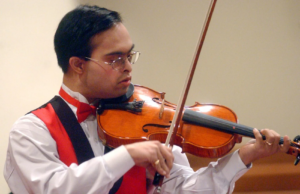
- Sujeet is a world-renowned musician born with Down syndrome who plays seven instruments — Bb & bass clarinet, alto sax, violin, trumpet, piano, and drums. He graduated with honours in 2001 (high school) and later from Berkshire Hills Music Academy in Massachusetts. Beyond music, he has represented at Special Olympics (gold & silver in swimming, skiing etc.), performs in many countries, gives motivational talks, and was inducted into the Buffalo Music Hall of Fame in 2022 — a first for a musician with Down syndrome.
- Gopi Krishnan Varma
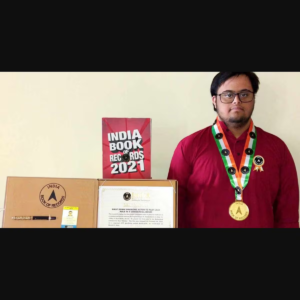
Gopi is recognised in the India Book of Records as the first Indian actor with Down syndrome to play a lead role in a feature film.His debut was in the Malayalam film Thirike (2021), in which he plays “Ismu”, a boy with Down syndrome. He also features in the 2025 Bollywood film Sitaare Zameen Par alongside Aamir Khan, marking his entry into mainstream Hindi cinema. Gopi’s journey includes challenges—respiratory issues as a child, balancing special schooling and regular schooling; overcoming health and educational barriers to develop skills in reading, writing, language, and to act in films.
- Babli Ramachandran
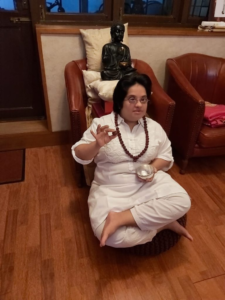
Babli is a powerhouse of talent: a trained Bharatanatyam dancer, yoga teacher, and swimmer who has also ventured into painting.
- Despite having only 1% vision early on, she was homeschooled with custom learning tools (e.g. sandpaper, tactile aids) to enhance her learning.
- She completed her arangetram (debut dance performance) at the age of 23 at Kalakshetra and has performed nationally and internationally.
- Babli has won medals in para swim meets, and even in the face of multiple health challenges (cataracts, pneumonia, learning delay), she has persevered to teach yoga, dance, and lead workshops.
- She inspires not only through her art, but also advocacy: her mother, Dr. Surekha Ramachandran, is a researcher and leads the Down Syndrome Federation of India (DSFI).
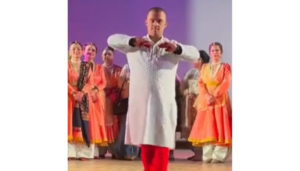
4. Rakshit Pandey is a Kathak dancer who has gained popularity through expressive performances on Instagram
5.Karishma Kannan
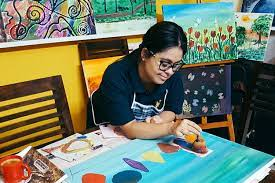
- Born in 1991, Karishma is a painter, dancer, and certified yoga teacher. She has held 4 solo exhibitions and one auction of her artwork, and donated over 135 paintings for charity causes.
- Her exhibitions and sales have raised funds for infant heart surgeries and special education programs in Vietnam and India.
- She is the recipient of the World Down Syndrome International Award in 2014 and again in 2018.
- Karishma founded Studio 21UP in Bangalore — an art studio and recreation center for young adults with Down syndrome.
- She walked the ramp as a model in inclusive fashion shows (e.g. for Aasman Foundation) and is a strong self-advocate for rights and inclusion
- Karishma has also spoken at the United Nations (Geneva) on World Down Syndrome Day.
- Her artistic style often reflects vibrant natural landscapes, using acrylics, spray and drip techniques.
- Despite health challenges (she battled TB-meningitis, which affected mobility) she continues to create, perform, teach, and give back.
6.Dhriti
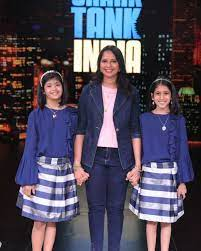
- Dhriti is a young artist with Down syndrome who co-founded the brand Tickle Your Art together with her mother.
- Their brand features her artwork on products (prints, merchandise) and shares her creative vision.
- Their story received national attention when it was featured on Shark Tank India.
7.Rishi Shahani
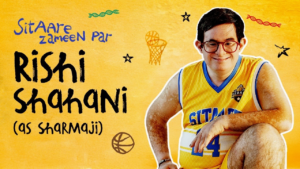
Rishi is both a champion athlete and actor — a rare blend of strength, artistry, and resilience.He represented India at the 1999 Special Olympics World Games, winning gold and silver in swimming.
- Later, he also won gold in badminton at national games.
- Rishi overcame serious health challenges and was once told he might never walk, but proved them wrong through sheer determination.
- In 2025, he made his Bollywood debut in Sitaare Zameen Par, playing “Sharmaji.” His presence on set is said to bring positivity, and he reportedly led yoga sessions among cast and crew.
- Rishi is also a model, dancer, and wellness advocate (yoga) — integrated into his life beyond sports alone.
- His family is deeply involved: his mother is a writer and author of books about life with Down syndrome.
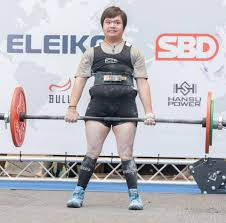
- Prithvi Raj Sengupta
- Prithvi is a powerlifting champion (special category) who competes in strength sports.
- His journey includes rigorous training, discipline, and breaking stereotypes about physical limitations.
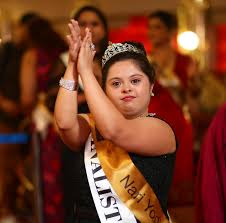
- Sania Khimji
Sania, from Karnataka, is both a model and artist.
She was crowned Miss India in the special needs category in 2023, bringing visibility to people with disabilities.She uses her platform to promote inclusion, self-expression, and creative identity for persons with Down syndrome.
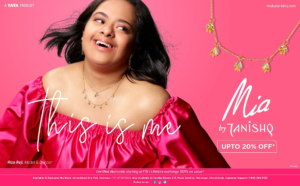
- Riza Reji
Riza is a model from Bengaluru who made history as the first Indian selected for the Global Down Syndrome Foundation’s “Be Beautiful, Be Yourself” fashion show.
Her involvement in global fashion platforms showcases representation of people with Down syndrome in mainstream and international arenas.
- Aakash Chiripal
Aakash is a fashion enthusiast and influencer on Instagram, curating style and visual expression for people with Down syndrome.
His Instagram presence highlights clothing, styling, and identity, often challenging norms about fashion and disability.