


Technology is transforming healthcare at a breathtaking pace. Artificial intelligence now supports diagnosis, remote monitoring keeps patients connected from home, and electronic health records make information accessible in seconds. For physicians, these tools aren’t just optional anymore—they’re becoming the standard.
But here’s the catch: while tech can make medicine more efficient, it can also erode the very thing that makes care effective—trust.
Patients today don’t automatically equate technology with better care. In fact, research shows they can become uneasy when their doctor’s attention shifts from them to a screen, or when decisions feel like they’re coming from an algorithm instead of a human being. The challenge isn’t whether to adopt new tools—it’s how to use them without losing that essential connection.

Why Tech Can Be a Double-Edged Sword
When used well, technology enhances the doctor-patient relationship. It can speed up diagnoses, reduce unnecessary visits, and give patients real-time insight into their own health. But when used poorly—without explanation, without inclusion—it can create distance.
One Dutch study found that women’s trust in their doctor dropped when AI played a role in high-risk decision-making, unless it was clearly explained how the tech supported the physician’s expertise. In India, surveys revealed that only a small percentage of patients were aware of the government’s digital health initiatives—meaning many missed out on potential benefits simply because no one had taken the time to walk them through it.
It’s not that patients fear technology itself. They fear being left out of it.
Making Technology Part of the Conversation
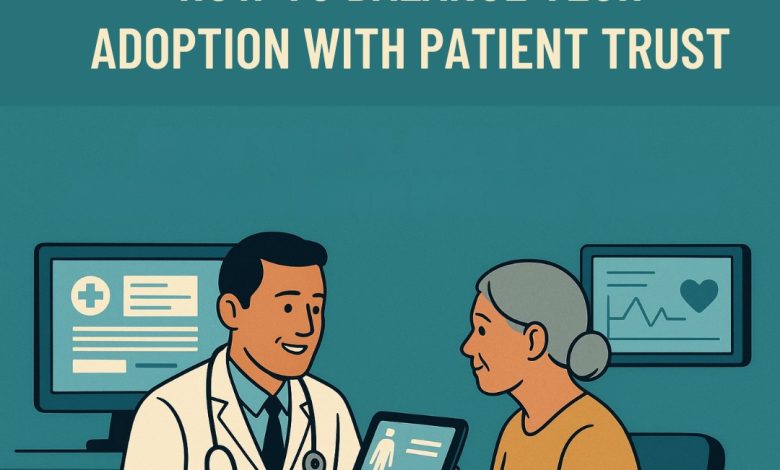
The key to balancing tech adoption with patient trust is transparency. Patients respond far better when they’re invited into the process—when a doctor turns the screen toward them, shows their results, and explains what the technology is doing. It’s a simple shift in body language and dialogue, but it transforms technology from a cold intermediary into a shared tool.
Some healthcare systems abroad have already mastered this balance. Atrium Health’s “Hospital at Home” program, for instance, blends remote monitoring with in-person visits so patients get the convenience of care without the feeling of being left to fend for themselves. Geisinger Health uses predictive analytics to identify patients at risk before symptoms surface—but they don’t hide it. They tell patients exactly how it works and why it matters, framing AI as a safety net rather than a mysterious decision-maker.
The doctor-patient relationship in India is deeply personal. Many families choose a physician based on reputation and trust built over decades, sometimes across generations. But India is also at the heart of a digital health explosion: the Ayushman Bharat Digital Mission, AI-enabled diagnostics, telemedicine platforms, and wearable integration are transforming access.
The challenge? A gap in digital health literacy. Research shows that while awareness of government digital services is high, only a small fraction of patients know about initiatives like the ABDM. In rural and semi-urban areas, technology can feel intimidating—especially for older patients or those with limited education.
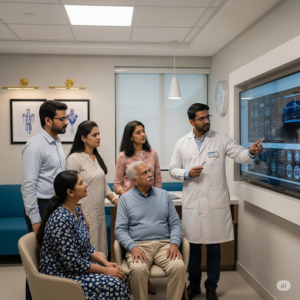
Here’s where physicians have a unique opportunity. By making technology a part of the conversation—quite literally bringing patients and families into the digital loop—you can turn a potential trust gap into a trust multiplier. Imagine showing an elderly diabetic patient their glucose trend graph on your tablet, then explaining how the app flags dangerous spikes early so they can avoid hospital admissions. Or walking a family through how teleconsultations can save travel costs while keeping continuity of care with their trusted doctor.
When patients in India see technology as an extension of your care—not a replacement—they not only accept it, they embrace it. And in a country where word-of-mouth still shapes healthcare choices, that kind of trust can spread faster than any app update.
Financial Barriers and Economic Feasibility
Cost remains a significant limiting factor in the adoption of advanced healthcare technologies for much of India’s population. With approximately 70% of people living in rural areas who predominantly seek care at primary health centers (PHCs), the high expenses related to wearable tracking devices, continuous glucose monitoring systems (CGMS), and insulin delivery technologies can be prohibitive. This economic barrier often leads to wariness or outright avoidance of such innovative tools. To bridge this gap, various outreach programs aimed at increasing accessibility and education about affordable technology options are necessary. Moreover, there is need for a strong appeal for government policies to reduce the GST slabs on Medicare technology applications, thereby lowering costs and improving affordability. Such measures can enhance economic feasibility and enable wider diffusion of these potentially life-changing healthcare innovations and making these essential tools more affordable and accessible to a broader population.
The Subtle Power of Presence
It sounds almost too simple, but research has shown that eye contact can significantly influence how much patients trust their doctor. When your focus is locked on a screen instead of the person in front of you, they may feel like their story doesn’t matter.
That doesn’t mean avoiding the screen altogether—it means making it part of the shared experience. Narrating what you’re doing as you type, or showing patients how the data updates in real time, can actually make them feel more involved. Health tech can predict, but your stethoscope still listens.
One patient put it perfectly:
“When my doctor shows me my scans and explains them, I feel like we’re solving the problem together—not like I’m just waiting for a verdict.
Five Habits That Keep Trust Intact
Here are five practical ways to integrate technology without letting it overshadow the human side of medicine:
- Start with Eye Contact
Spend the first moments of the consultation fully focused on the patient before turning to a device. - Share the Screen
Position your device so the patient can see what you’re seeing. Use phrases like, “Let’s look at this together.” - Narrate Your Actions
Instead of silent typing, explain what you’re doing: “I’m just pulling up your last lab results to compare them with today’s.” - Tailor to the Patient’s Comfort Level
Some patients will love tech-heavy interactions; others will need more reassurance. Adjust your approach accordingly. - Educate While You Use
Take small opportunities to explain tools—whether it’s an AI-powered diagnostic, a wearable tracker, or the patient portal. This builds confidence and familiarity.
Culture and Context Matter
Trust isn’t built in a vacuum—it’s shaped by cultural expectations and communication styles. In India, involving a patient’s family in explanations can make a huge difference in adoption and adherence.
The principle is the same: treat patients as partners in their care. Technology should feel like something you do with them, not to them. Truly, your stethoscope still beats your smartphone.
Why This Is Worth the Effort
Balancing tech and trust isn’t just about good bedside manner—it’s a competitive advantage. In an era where patients have more choice than ever, those who feel seen, heard, and respected will stick with their doctor. That means fewer missed appointments, better adherence to treatment plans, and more word-of-mouth referrals.
As healthcare technology spending climbs into the trillions, the physicians who thrive will be those who don’t just keep up with new tools, but know how to weave them into a patient experience that still feels personal.
The Formula for the Future
AI will become more capable, remote care will be more common, and wearables will track everything from heart rate to blood glucose. But no matter how advanced the tools get, patients will still crave reassurance that there’s a human mind and heart guiding the process.
The next time you’re in the exam room, remember: every moment of shared understanding you create is an investment in trust. Every explanation turns a mysterious piece of tech into a tool your patient believes in. And in the end, no algorithm in the world can replace human trust.